Today I’m going to reveal the best batch watermark tool in 2019.
And
this is important:
I
didn’t just rate the tools based on my personal opinion.
I
put each batch watermark tool to the test.
That
way, I could find the best backlink tool on the market right now… based on
actual data.
So, without further ado, let’s do this!
Introducing The Competitors
Before
we dive into the test results, let’s take a quick look at each tool.
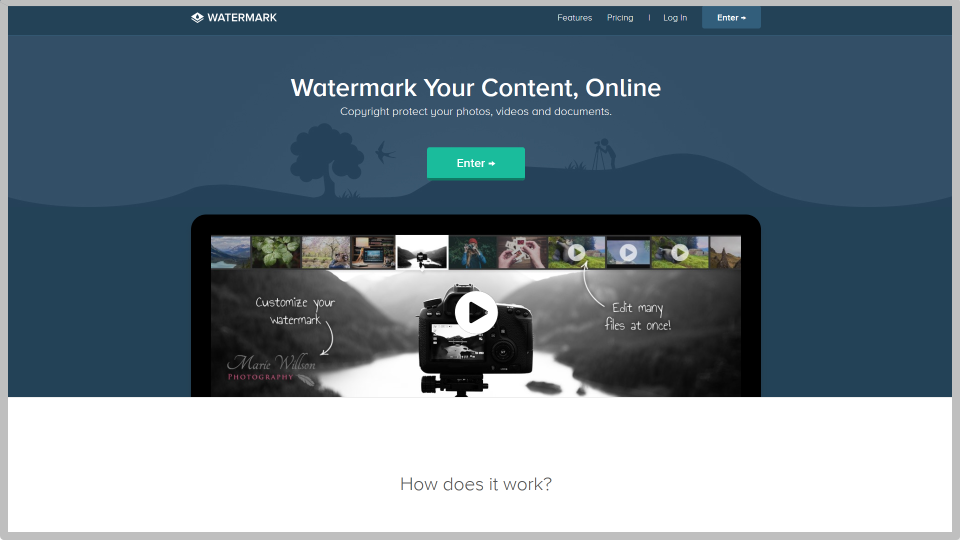
Watermark.ws
Watermark.ws
was one of the first web app that let anyone add watermarks to photos online.
The
tool (and company) is popular because of processing unlimited files at once.
But
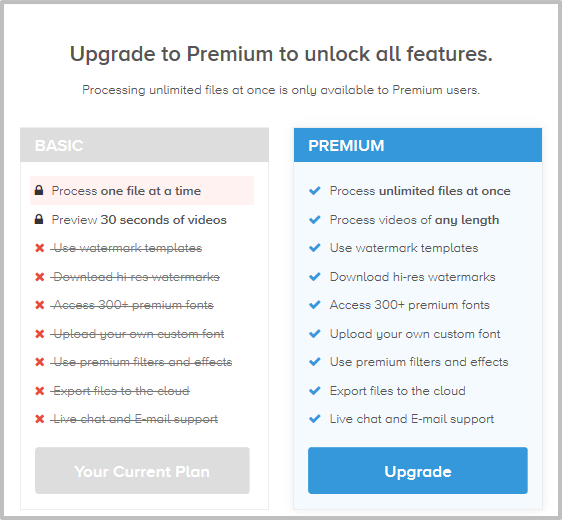
since they offer a “freemium” model with quick onboarding for users, batch
watermark or process unlimited photos are allowed to Paid users, which costs
$6.99 per month or $49.99 annually.
With
a free account, you can process only one file at a time and you can’t download
high resolution watermarks.
Let’s
check out our next batch watermark tool…
Watermarkly
Watermarkly
is an online batch watermarking app and the company claims to create and add
the watermark using quick process (50 photos in 5 minutes)
You
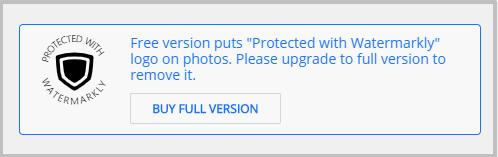
can use the app for free, but it adds “Protected with Watermarkly” logo along
with your own watermark and charging a $32.95 to remove this.
Watermark.ink
Watermark.ink is an online photo watermarking tool. You can add your own logo images and convert your text or logo into your templates for future use. Developer, Krishna said that the service(version 1) is fully browser based, so there is no performance difference between paid and unpaid version.
Currently
there is only one limit for free version; free version is no for commercial
use. But when version 2 is released, they will add download limits and/or other
hard limits to free version.
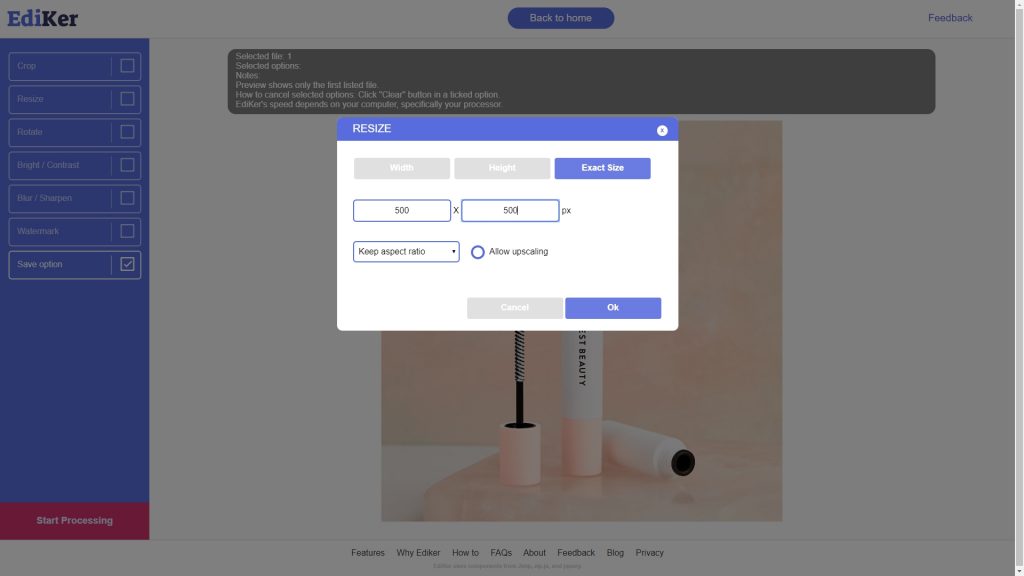
EdiKer
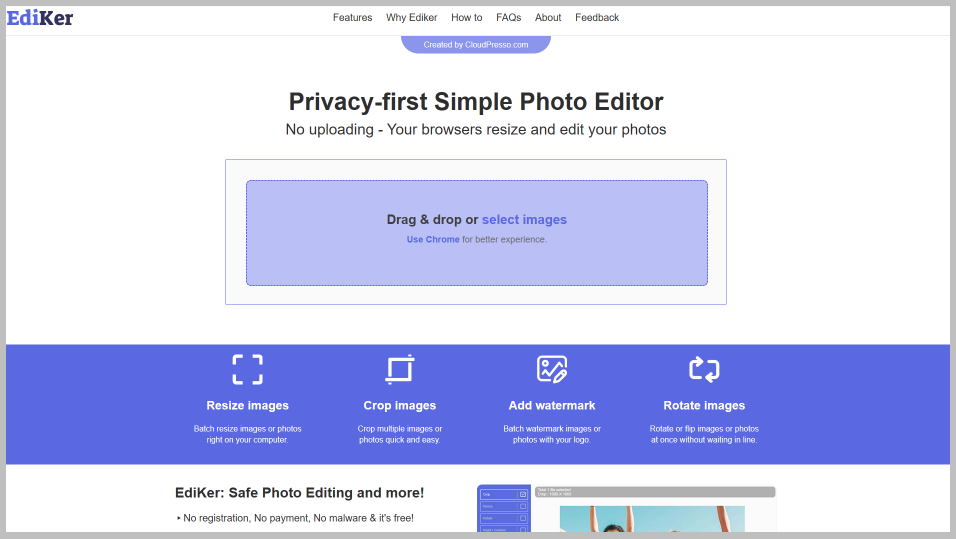
Ediker
started as a straight-up bulk photo editing tool. Your photos are watermarked
with modern browser abilities on your computer, they do not get uploaded or
transmitted to any servers.
They’ve
recently branched with lots of new features, like a bulk photo resizer tool. It
is a totally free online service that enables you to add your brand logo or a
watermark in bulk.
Here
are summaries of famous online batch watermark software license.
Which Online Photo Watermark App Add Watermark Without Losing Quality?
This
test I did was check how much quality and file size the photos loses after
adding watermark.
Before
answer this question, we have to understand the JPEG file type.
JPEG
is the default file type for most digital camera, unless you shoot in RAW file
format with DSLR camera.
JPEG
is a compressed file format. What that means is every time you save and re-save
it; you’re losing a little bit of image quality. With a JPEG quality setting,
you can control the amount of information is discarded. Then is JPEG lossless
when quality is set to 100? No. JPEG is a lossy compression file type, quality
ratio does not make it lossless. Some original image formation is lost
regardless of the quality setting.
In
general, quality level of 80% produce good enough images without a noticeable
loss of quality by the human eye. If you set watermark on an image with higher
quality, set to higher JPEG quality than 80%, but make sure that higher quality
results in a bigger file size.
Let’s
go back to the question – which online photo watermark app add watermark
without losing quality? There is no watermark app keeping original quality
at 100%. Instead, I will test which watermark app produces a high quality
(setting the compress quality to 80%) at optimal file size without sacrificing
quality?
Then
how do we compare the quality between original and watermarked image? How do I
calculate degradation after watermark embedding process? For this test, I use
PSNR algorithm to simulate the perception of our eye. PSNR, Peak- signal-to
noise ratio (PSNR), is a quality measurement between two images. If the PSNR is
high, the quality of watermarked image is very closed to the original. But
better visual quality also increased the file size. So, you have to find the
balance between image quality and file size.
Let’s
see what each tool finds an optimal balance for the good visual quality at low
file size.
The
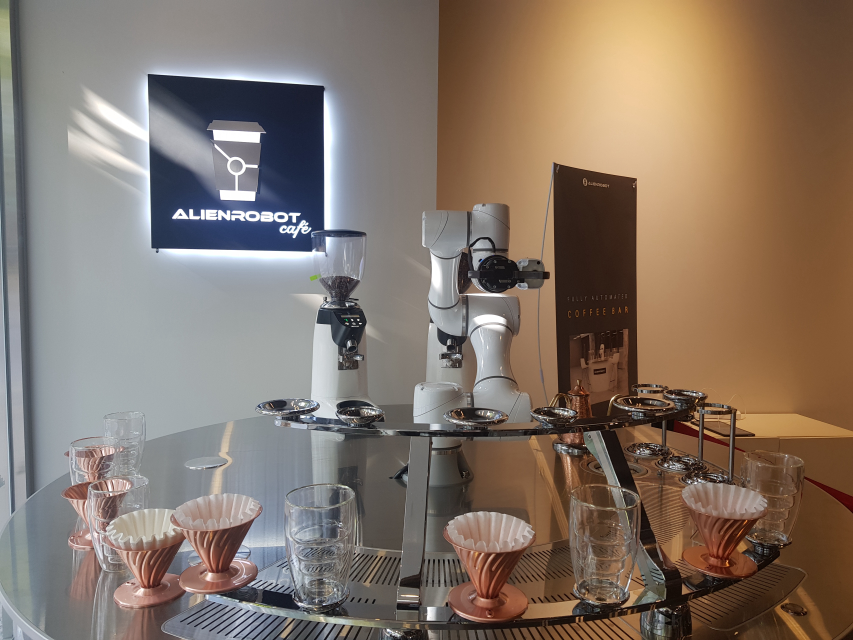
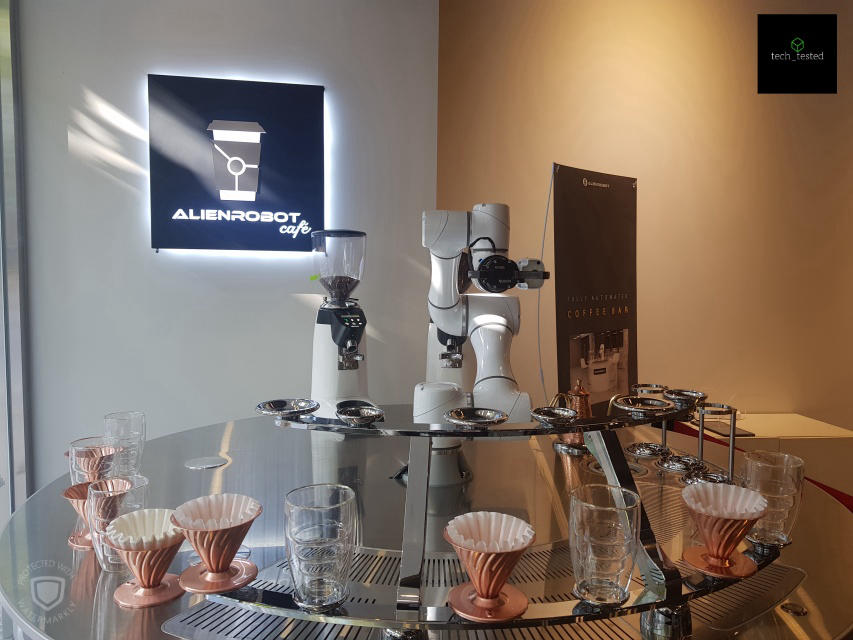
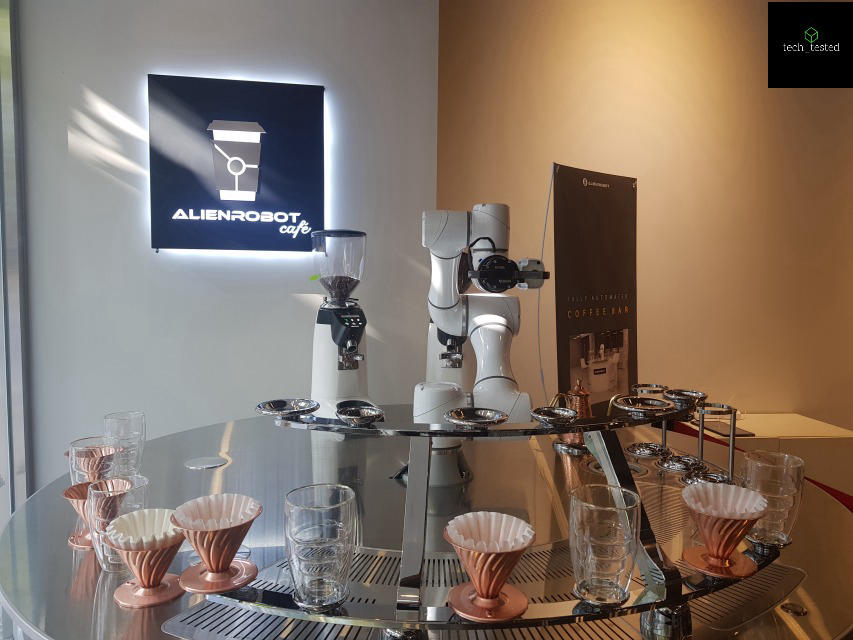
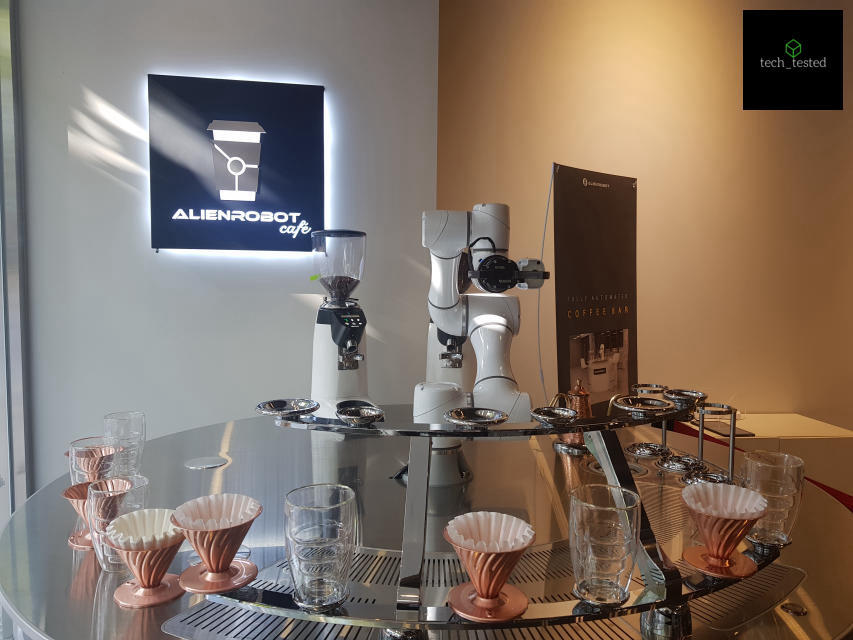
test image is this one: Robot Barista.jpg
Note: This photo taken with Samsung Galaxy Note 8 camera and 3.25MB in size.
App
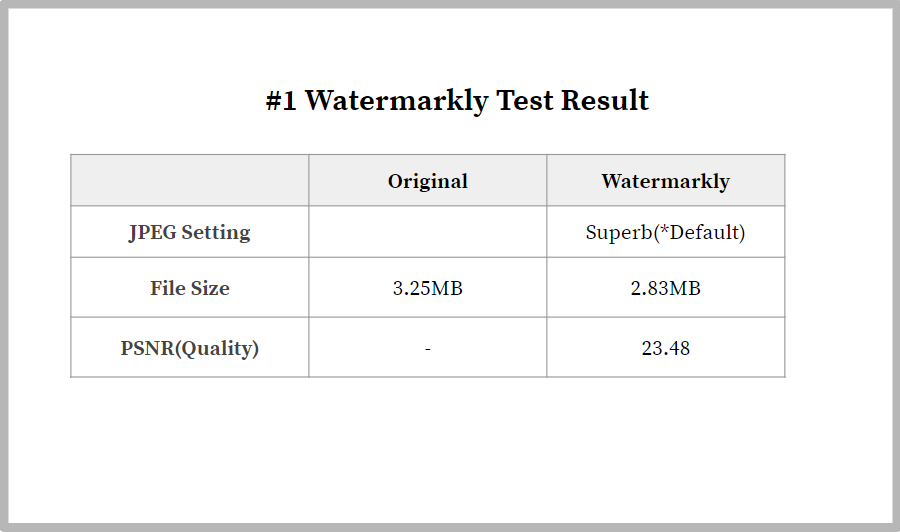
#1: Watermarkly
Watermarkly
use their own JPEG quality setting; Maximum to Medium. And it lets you change a
JPEG quality by selecting it in the drop-down menu.
Test
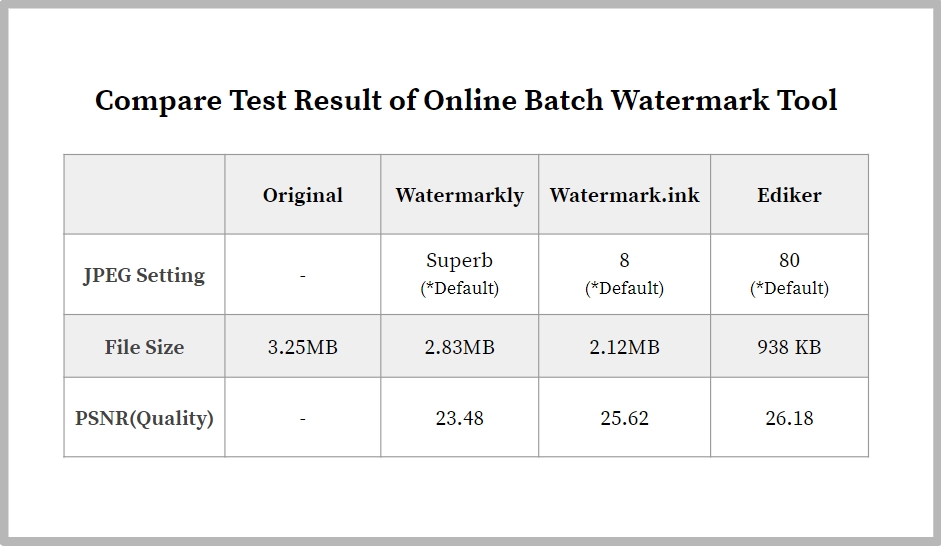
image is watermarked at default JPEG quality (Superb).
App
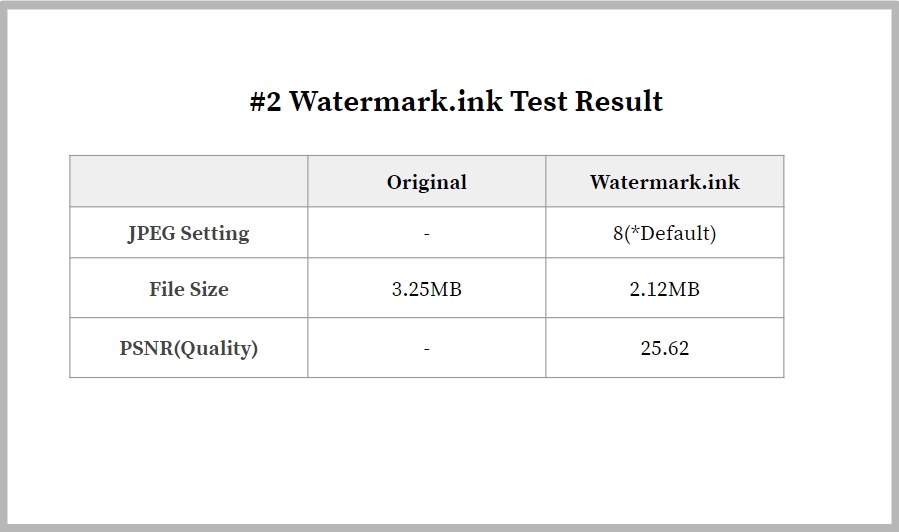
#2: Watermark.ink
You
have a JPEG quality slider that goes from 1 to 10. The default setting is
quality 8.
App
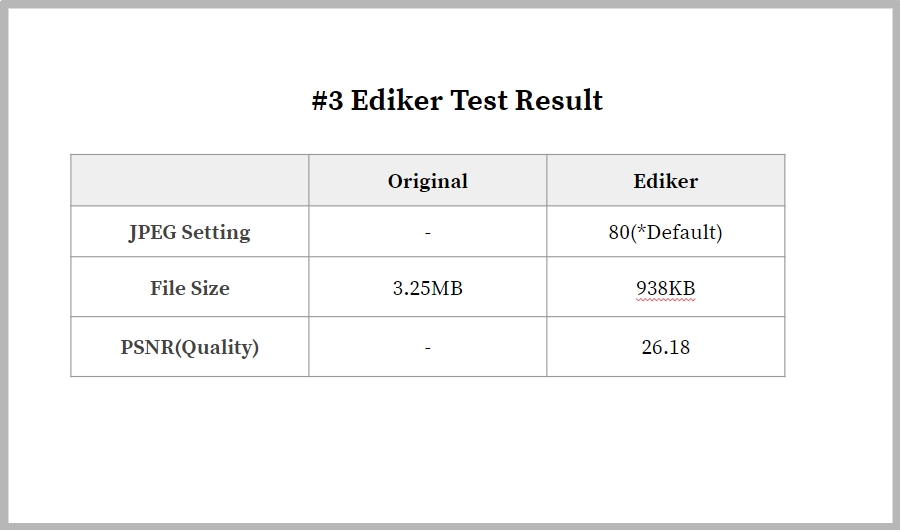
#3: Ediker
JPEG
quality setting will be shown under Save Option. You can move JPEG option
slider horizontally for quality level selection; scale from 1(worst) to
100(best). Default quality setting for JPEG is 80.
And the Winner Is…
Based on the results of this little test, Ediker comes out on top. It’s got an optimal file size with the highest (PSNR) quality.
Now,
I’d like to hear from you; which online photo watermark tool do you use to add
image watermark?